
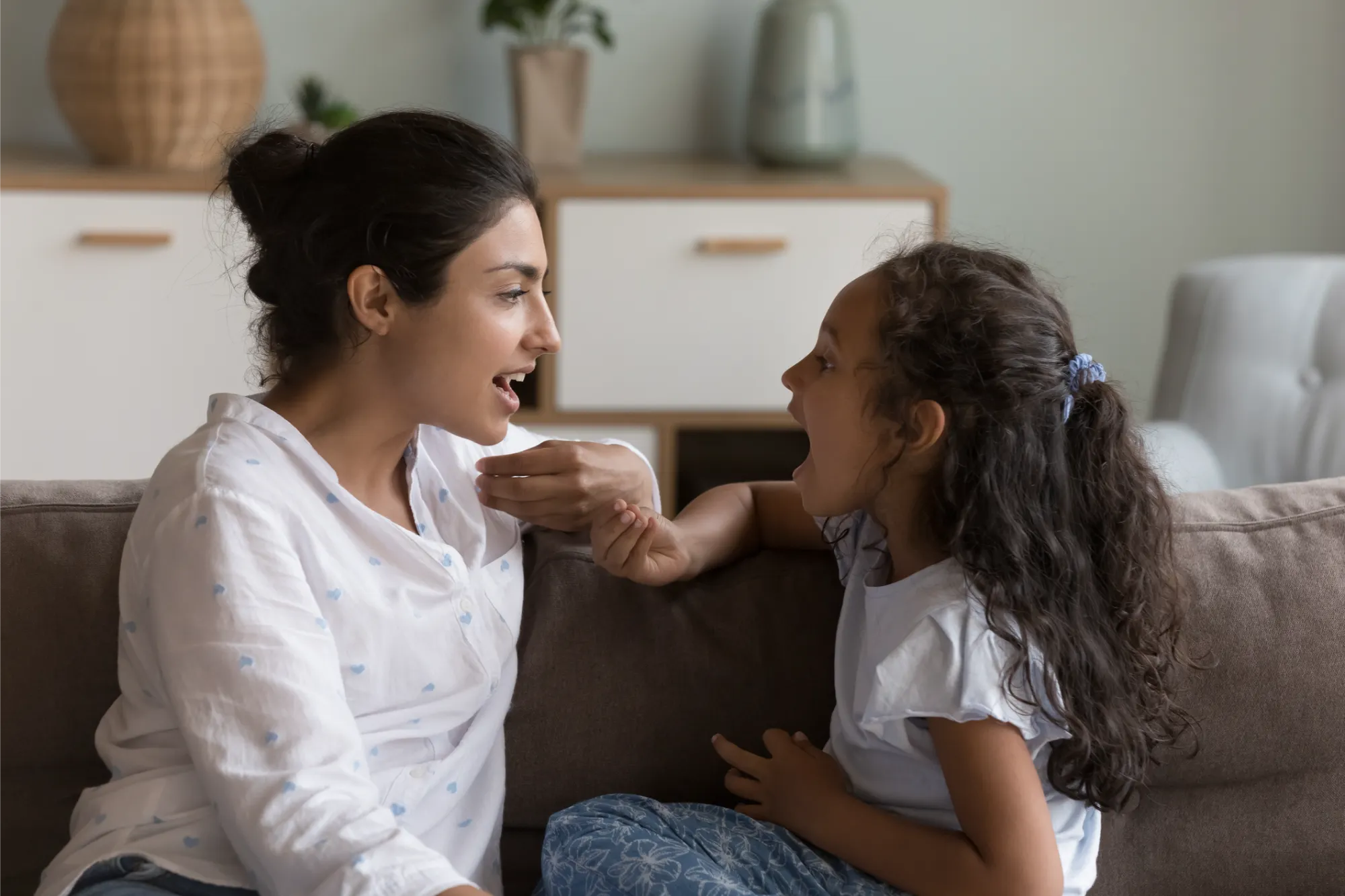
Helping little voices grow—one chat at a time
If you’ve ever asked your preschooler, “How was your day?” and gotten a one-word answer (or a shrug), you’re not alone. At this age, children are still learning how to put their thoughts, feelings, and experiences into words. The good news? A few simple, playful questions can open the door to meaningful conversations. And conversations are the building blocks of language skills.
At Owl Hill Learning Academy, we know that everyday conversations do more than pass the time. They help children expand vocabulary, practice sentence structure, develop listening skills, and learn how to express themselves with confidence. Even a short chat in the car or at the dinner table can make a big impact.
Start with Their Day
Instead of broad questions, try prompts that help your child focus and reflect.
- “What was your favorite part of today?”
- “What made you laugh?”
- “Who did you play with?”
- “Did anything feel tricky or frustrating?”
- “What’s something new you learned?”
These kinds of questions encourage children to recall details and organize their thoughts—key building blocks for early communication.
Spark Imagination
Preschoolers thrive on creativity and pretend play. These questions invite them to stretch their language and storytelling skills.
- “If you could be any animal, what would you be?”
- “What would you do if you had a magic wand?”
- “Let’s pretend we’re going on an adventure. Where are we going?”
- “What would your dream playground look like?”
Imaginative conversations help children experiment with new words and ideas in a low-pressure, fun way.
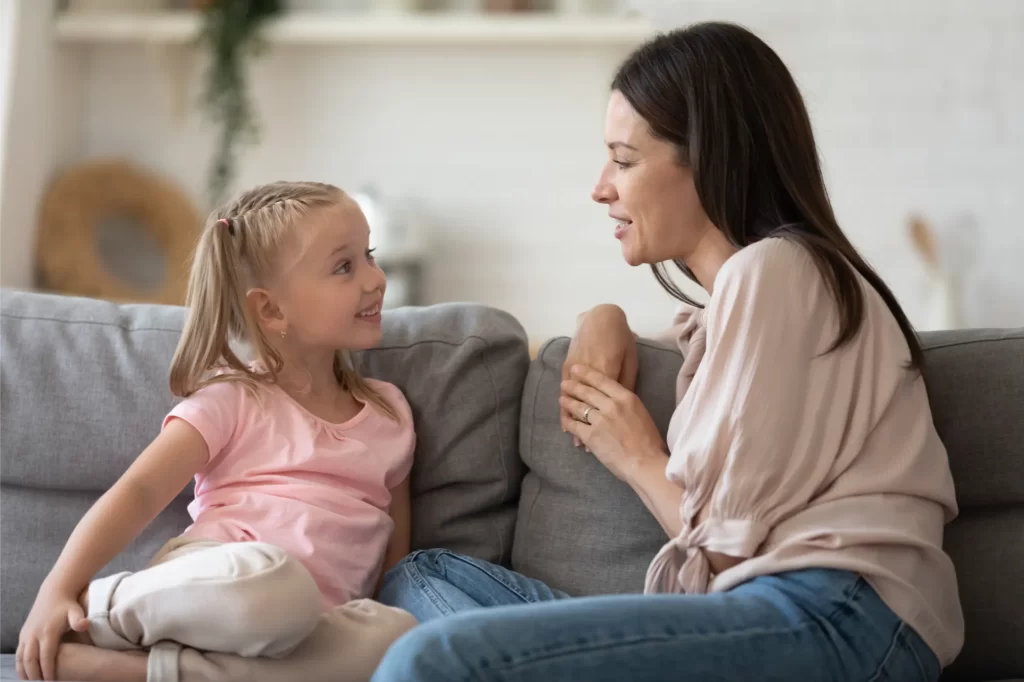
Talk About Feelings
Learning to name and understand emotions is a big part of early development.
- “What made you feel happy today?”
- “Did anything make you feel upset?”
- “How do you think your friend felt?”
- “What can we do when someone feels sad?”
These conversations build emotional vocabulary and help children learn how to express themselves clearly and empathetically.
Encourage Curiosity
Little kids ask big questions. Turn that curiosity into great conversation!
- “Why do you think that happened?”
- “What do you think will happen next?”
- “How do you think that works?”
- “What would happen if we tried it a different way?”
Open-ended questions like these support critical thinking while encouraging longer, more detailed responses.
Be Silly Together
Sometimes the best conversations are the ones that make you both laugh.
- “What would happen if it rained ice cream?”
- “Would you rather have purple hair or green skin?”
- “Can you make up a silly story about a dinosaur and a cupcake?”
Playful moments help children feel relaxed and confident, which makes them more likely to talk and share.
Why It Matters
Every conversation—no matter how small—helps your child grow. When you ask open-ended questions and truly listen to the answers, you’re helping your preschooler:
- Build vocabulary and sentence structure
- Strengthen listening and comprehension skills
- Develop confidence in expressing thoughts and feelings
- Practice back-and-forth communication (a key social skill)
At Owl Hill Learning Academy, we incorporate these kinds of meaningful interactions into every day, creating a nurturing environment where children feel heard, supported, and excited to communicate.
A Simple Tip for Parents
Don’t worry about getting the “perfect” answer; focus on the connection. Follow your child’s lead, show genuine interest, and let the conversation unfold naturally. Sometimes the most memorable moments come from the silliest questions.
Looking for a preschool that encourages communication, creativity, and confidence?
Owl Hill Learning Academy is here to help your child find their voice and use it with joy.
