
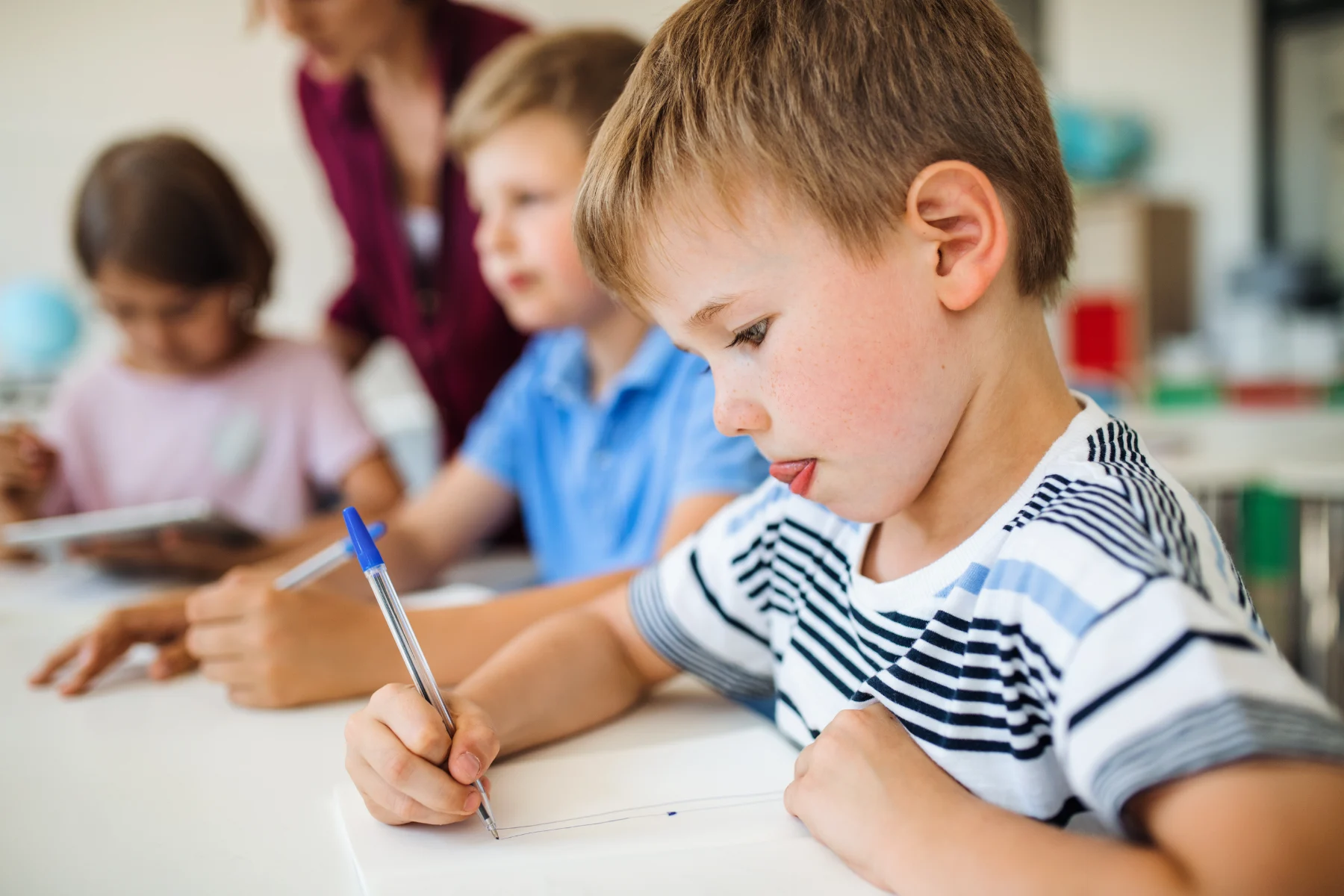
Before children are ready to write letters and words, they need to develop the small-muscle control that makes writing possible. Fine motor skills involve the coordinated use of the hands, fingers, and wrists for precise movements. Activities that strengthen these skills can help children build the hand strength, coordination, and control they need to draw, use scissors, hold a pencil, and eventually write.
The good news? Building fine motor skills doesn’t have to feel like practice. Many everyday activities and playful experiences give young children the opportunity to strengthen their hands while having fun.
What Fine Motor Skills Are Important for Writing?
Writing requires more than knowing the alphabet. Children need to control a writing tool, coordinate what they see with how their hands move, and make small, deliberate movements
Fine motor activities can help children develop:
- Hand and finger strength for holding and controlling pencils and crayons
- Hand-eye coordination for guiding movements accurately
- Pincer grasp using the thumb and fingers to pick up and manipulate small objects
- Wrist and hand control needed for drawing lines, shapes, and letters
- Bilateral coordination, or using both hands together for tasks such as holding paper while drawing
These skills develop gradually through play and everyday experiences.
Fine Motor Activities to Build Writing Readiness
Play with playdough. Rolling, squeezing, pinching, and shaping playdough gives little hands plenty of opportunities to build strength and coordination. Children can make balls, snakes, letters, or other shapes while working their fingers and hands.
Use crayons, markers, and chalk. Drawing is an important step toward writing. Encourage children to scribble, draw pictures, trace simple shapes, make lines and curves, and experiment with different writing tools. Short, easy-to-grip crayons can be especially helpful for young children.
Practice with tongs and tweezers. Picking up pom-poms, small toys, or other appropriately sized objects with child-safe tongs or tweezers strengthens the same finger muscles used for grasping and controlling a pencil.
Try using scissors. Cutting along lines or around simple shapes helps children develop hand strength, coordination, and control. It also encourages children to use both hands together, one to operate the scissors and the other to hold and turn the paper.
String beads or make a threading activity. Placing large beads onto a string or threading objects through holes requires concentration and precise finger movements. These activities help strengthen hand-eye coordination while developing finger dexterity.
Build with blocks and small construction toys. Connecting, stacking, and manipulating blocks gives children opportunities to use their fingers in different ways. Building activities also encourage problem-solving and coordination.

How Do Fine Motor Skills Help Children Learn to Write?
Fine motor development gives children the physical foundation they need for writing. As children gain strength, coordination, and control, they become better able to manipulate writing tools and make the controlled movements needed to draw shapes, letters, and numbers.
At Owl Hill Learning Academy, children have opportunities to develop these skills through age-appropriate play, hands-on activities, and everyday learning experiences. Rather than expecting young children to master writing before they are ready, early childhood learning provides the foundation that helps writing emerge naturally.
The goal isn’t perfect handwriting at an early age. It’s giving children plenty of opportunities to strengthen their hands, practice coordination, and build confidence as they prepare for the next stage of learning.
Frequently Asked Questions
Children start developing fine motor control as infants, but intentional activities like rolling playdough, scribbling with chunky crayons, and stacking blocks typically begin between ages 1 and 3. In the preschool and pre-K years, targeted play helps refine their finger dexterity and hand strength just in time for formal writing instruction.
Ready hands show signs of a mature grasp naturally as small muscle control improves. Rather than forcing a standard tripod grip early on, look for indicators like the ability to pinch small items with the thumb and pointer finger, use both hands cooperatively, and manipulate tools like tongs or scissors. Playful finger exercises build the physical control necessary for an easy, comfortable grip.
Repetitive worksheets can tire and frustrate little hands before the hand muscles, wrist stability, and bilateral coordination have fully matured. Engaging in hands-on activities—such as threading beads, cutting paper, and sculpting dough—develops the exact muscle groups required for pencil control, keeping learning joyful, frustration-free, and effective.
Give Your Child the Head Start They Deserve at Owl Hill Learning Academy
Setting your child up for writing success starts long before the pencil meets the page—it begins with the joyful, intentional play happening every day at Owl Hill Learning Academy. Our tailored early learning environments turn essential fine motor development into an engaging experience where young minds and hands flourish together. Give your little learner the ultimate head start in an environment designed to nurture their natural potential, spark their imagination, and build skills that last far beyond the preschool years. Schedule a visit to Owl Hill Learning Academy today and watch their confidence take flight!
